
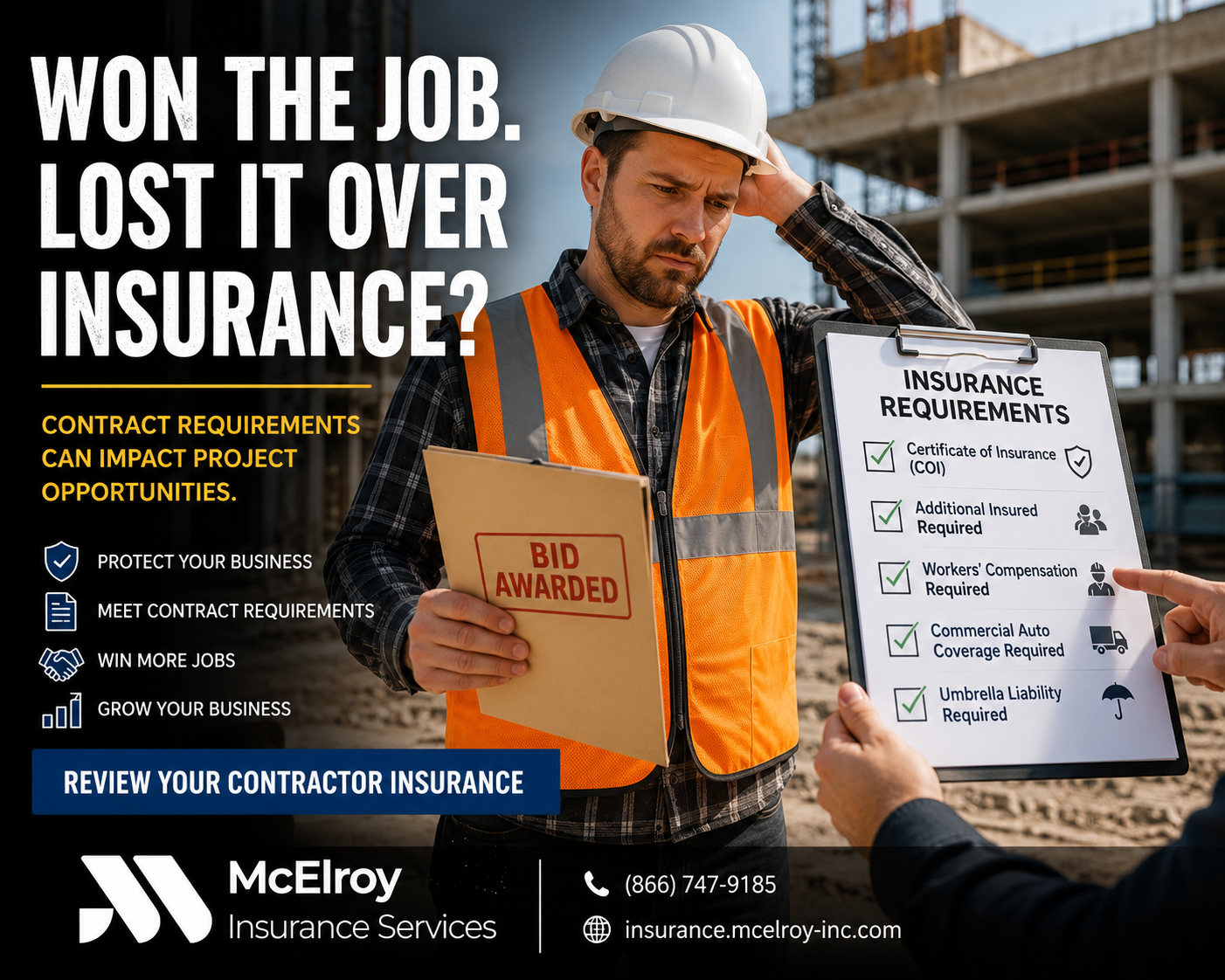
Most contractors assume they lose jobs because of pricing, competition, scheduling conflicts, or project experience.
While those factors certainly matter, another issue often affects whether a contractor wins—or keeps—a project:
Insurance requirements.
Many contractors submit a competitive bid, complete interviews, and receive positive feedback from the client, only to discover that insurance requirements create unexpected obstacles before work begins.
In some cases, the project is delayed. In others, the opportunity is awarded to another contractor who can meet the requirements more quickly.
Understanding common insurance requirements can help contractors avoid surprises and position their businesses for larger opportunities.
The Bid Was Accepted—Then the Problems Started
Imagine this scenario.
A contractor submits a bid for a commercial project and receives notice that their proposal has been selected.
The next step seems simple.
Then the client requests:
- A Certificate of Insurance
- Additional Insured status
- Workers’ Compensation documentation
- Commercial Auto coverage verification
- Specific liability limits
The contractor suddenly discovers that their current insurance program doesn’t satisfy the contract requirements.
Now what?
This situation occurs more frequently than many contractors realize.
Insurance Requirements Are Becoming More Common
Today’s project owners are increasingly focused on risk management.
Before allowing contractors onto a job site, many clients want proof that insurance requirements have been met.
Common examples include:
- General contractors
- Property management companies
- Commercial landlords
- Municipalities
- Government agencies
- Developers
- Large corporations
- Homeowners associations
From their perspective, verifying insurance coverage helps manage potential liability exposures associated with the project.
Common Insurance Requirements Contractors Encounter
Every contract is different, but several requirements appear frequently.
General Liability Insurance
General Liability Insurance is one of the most commonly requested coverages.
Clients often require evidence that a contractor carries liability coverage before work begins.
Depending on the project, minimum limits may be specified in the contract.
Workers’ Compensation Insurance
If employees are involved, Workers’ Compensation coverage is frequently required.
Many project owners want confirmation that workers are covered in the event of a work-related injury.
Commercial Auto Insurance
Contractors who operate vehicles for business purposes may be required to maintain Commercial Auto Insurance.
This requirement is especially common when vehicles enter job sites or transport equipment and materials.
Umbrella Liability Coverage
Larger projects often require higher liability limits.
An Umbrella policy may provide additional liability protection above underlying policies, helping contractors meet contractual requirements.
What Is Additional Insured Status?
One of the most misunderstood contract requirements is Additional Insured status.
Many project owners require contractors to add certain parties as Additional Insureds.
Examples may include:
- Property owners
- General contractors
- Landlords
- Project managers
Contract requirements vary, and the requested endorsement may differ from one project to another.
Because Additional Insured requirements can affect how contracts are fulfilled, contractors should review project documents carefully and discuss requirements with their insurance professional.
What Is a Waiver of Subrogation?
Another term contractors frequently encounter is Waiver of Subrogation.
Many contractors are unfamiliar with the phrase until it appears in a contract.
A Waiver of Subrogation endorsement may be requested by project owners, general contractors, or landlords as part of a broader risk management strategy.
Because requirements vary, contractors should review contract language carefully and verify whether endorsements are needed before work begins.
Timing Can Make the Difference
Even when coverage exists, timing can become a problem.
Many projects move quickly.
Clients may expect insurance documentation within hours or days of awarding the contract.
Common delays include:
- Missing certificates
- Incorrect business names
- Incorrect certificate holders
- Missing endorsements
- Expired policies
- Insufficient limits
When documentation is delayed, project owners may question whether the contractor is prepared to proceed.
In competitive situations, delays can sometimes impact project opportunities.
Insurance Can Become a Competitive Advantage
Many contractors view insurance as an expense.
However, contractors pursuing commercial work often discover that insurance can become a business development tool.
Being prepared with:
- Appropriate liability limits
- Workers’ Compensation coverage
- Commercial Auto coverage
- Required endorsements
- Current Certificates of Insurance
can help contractors respond more quickly when opportunities arise.
Instead of scrambling to meet requirements after winning a bid, prepared contractors are often positioned to move forward immediately.
Growing Into Larger Projects
As contracting businesses grow, project requirements often become more complex.
The insurance program that worked for a small residential operation may not satisfy the requirements of larger commercial clients.
Periodic reviews can help contractors evaluate whether their coverage aligns with the type of work they want to pursue in the future.
For many businesses, preparing before opportunity arrives is far easier than trying to solve insurance issues after a contract has already been awarded.
Request a Contractor Insurance Review
McElroy Insurance Services helps contractors understand insurance requirements, review contract obligations, and evaluate coverage options designed to support business growth.
Whether you’re pursuing residential work, commercial projects, government contracts, or property management opportunities, understanding insurance requirements can help position your business for success.
📞 Call: (866) 747-9185
📝 Request a Quote:
https://insurance.mcelroy-inc.com/quote/
Winning the bid is only part of the process. Making sure your insurance program can support the opportunity is just as important.