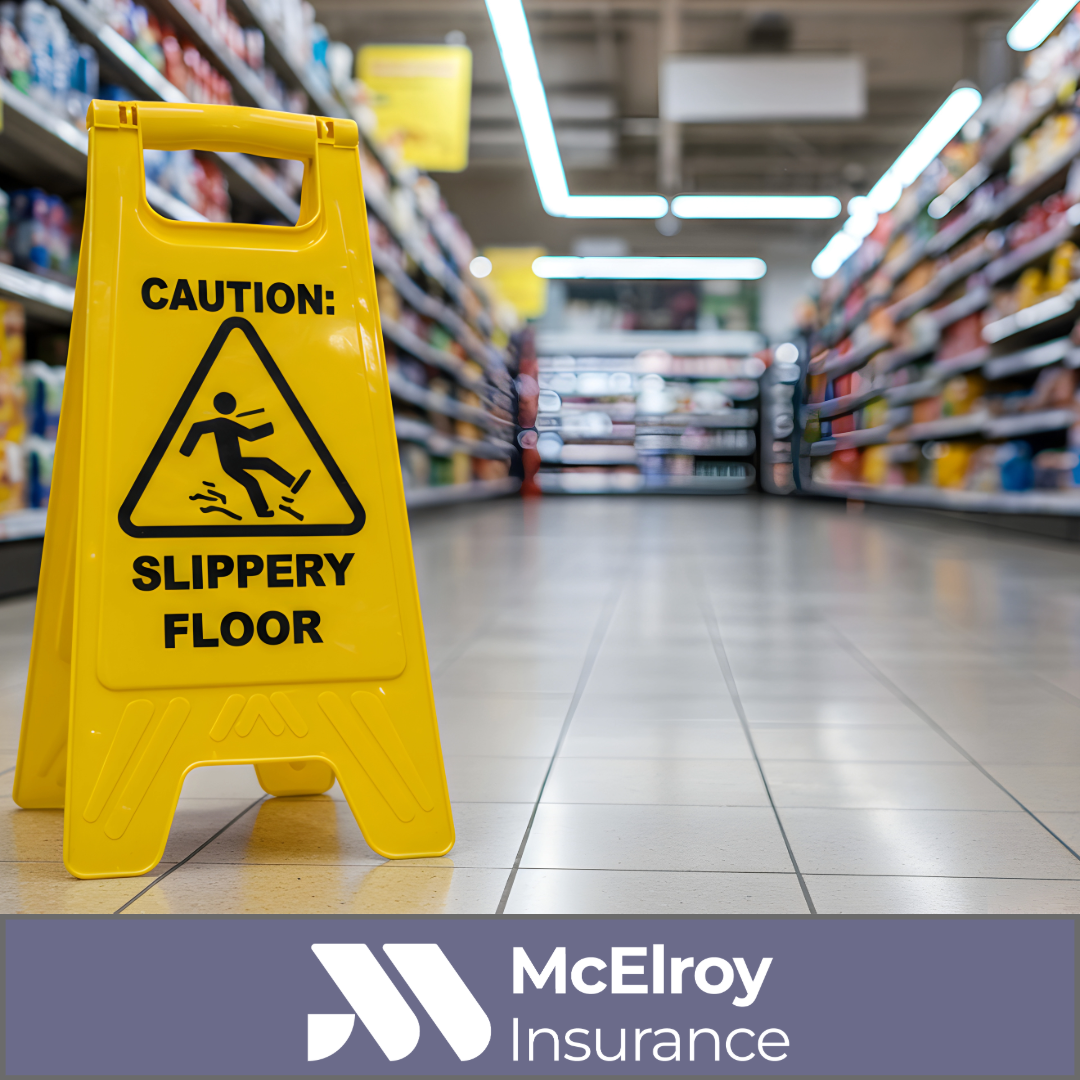
Slip-and-fall accidents are among the most common liability claims businesses face. Whether you operate a retail store, restaurant, office, church, warehouse, salon, fitness center, or service-based business, a single incident involving a customer injury can quickly become more complicated—and expensive—than many business owners expect.
Most business owners work hard to maintain safe conditions for employees, customers, and visitors. However, accidents can still happen. When they do, understanding the potential financial and legal implications can help business owners respond appropriately and better protect their operations.
How Do Slip-and-Fall Accidents Happen?
Slip-and-fall incidents can occur in nearly any business environment.
Common causes include:
- Wet floors
- Spilled liquids
- Uneven sidewalks
- Loose flooring
- Torn carpet
- Poor lighting
- Ice or weather-related hazards
- Debris in walkways
- Extension cords or obstacles
- Recently cleaned surfaces without warning signs
In some cases, the hazard may only exist for a short period of time. In others, the condition may have developed gradually over time.
Regardless of the cause, a customer injury can create significant concerns for both the injured person and the business owner.
What Happens After an Accident?
Every situation is different, but slip-and-fall incidents often follow a similar sequence of events.
Immediate Response
The first priority should always be addressing the injured person’s immediate needs.
Depending on the circumstances, this may involve:
- Providing assistance
- Calling emergency services
- Seeking medical attention
- Securing the area to prevent additional injuries
Documenting the Incident
Documentation can be extremely important following an accident.
Business owners may consider:
- Taking photographs of the area
- Recording the date and time
- Documenting weather conditions
- Preserving surveillance footage
- Identifying witnesses
- Completing an incident report
Accurate documentation can help establish what occurred and may become valuable if questions arise later.
Reporting the Incident
If an injury claim is made, the incident may need to be reported to the appropriate insurance carrier.
Prompt reporting often helps ensure the claims process can begin efficiently.
What Is Premises Liability?
Many slip-and-fall claims fall under an area of law commonly referred to as premises liability.
Generally speaking, businesses have a responsibility to maintain reasonably safe conditions for customers, visitors, vendors, and guests.
When an injury occurs, questions often focus on issues such as:
- Did a hazardous condition exist?
- Was the hazard known?
- Should the hazard have been discovered?
- Were reasonable steps taken to address the condition?
- Were warning signs provided when appropriate?
The answers to these questions can play a significant role in how a claim develops.
Medical Costs Can Add Up Quickly
One common misconception is that a slip-and-fall claim only involves minor injuries.
Unfortunately, that is not always the case.
Potential injuries may include:
- Fractures
- Head injuries
- Back injuries
- Neck injuries
- Shoulder injuries
- Knee injuries
- Soft tissue injuries
Medical treatment can involve:
- Emergency room visits
- Diagnostic testing
- Physical therapy
- Surgery
- Follow-up appointments
- Rehabilitation services
Depending on the severity of the injury, costs can increase significantly.
Lawsuits Are Not Always About Fault Alone
Many business owners assume that if they did not intentionally cause an injury, they have nothing to worry about.
However, liability claims often focus on whether reasonable care was exercised to maintain safe conditions.
Even when a business owner believes they acted appropriately, legal disputes can still arise.
Defending a claim may require:
- Attorneys
- Investigations
- Expert witnesses
- Court appearances
- Settlement negotiations
Legal defense costs alone can become substantial, regardless of the outcome of the case.
How General Liability Insurance May Help
Many businesses purchase General Liability Insurance as part of their overall risk management strategy.
Depending on the policy language, coverage terms, and facts of the claim, General Liability Insurance may help with:
- Bodily injury claims
- Medical expenses
- Legal defense costs
- Settlement negotiations
- Court-awarded damages
Coverage varies by policy, and exclusions or limitations may apply. For this reason, business owners should periodically review their business insurance coverage to better understand how their policies respond to potential liability exposures.
Reducing the Risk of Slip-and-Fall Claims
While no business can eliminate every risk, there are practical steps that may help reduce exposure.
Examples include:
- Conducting routine inspections
- Repairing damaged flooring promptly
- Improving lighting in customer areas
- Cleaning spills quickly
- Using warning signs during cleaning
- Keeping walkways clear
- Training employees on hazard identification
- Maintaining written safety procedures
Small preventive measures can often help reduce the likelihood of larger problems later.
Protecting Your Business Before a Claim Happens
The best time to evaluate liability risks is before an incident occurs.
Many businesses focus on sales, operations, staffing, and growth, but risk management is also an important part of long-term success.
A single accident may not seem significant at first, yet the financial impact can extend far beyond immediate medical expenses.
Understanding your liability exposures and maintaining appropriate insurance coverage can help provide valuable protection when unexpected situations arise.
Request a Business Insurance Review
McElroy Insurance Services helps businesses evaluate liability exposures and review coverage options designed to protect their operations.
Whether you own a retail store, restaurant, office, contracting business, church, or professional services firm, reviewing your coverage can help identify potential protection gaps before a claim occurs.
📞 Call: (866) 747-9185
📝 Request a Quote:
https://insurance.mcelroy-inc.com/quote/
A few minutes spent reviewing your coverage today may help your business navigate unexpected challenges tomorrow.