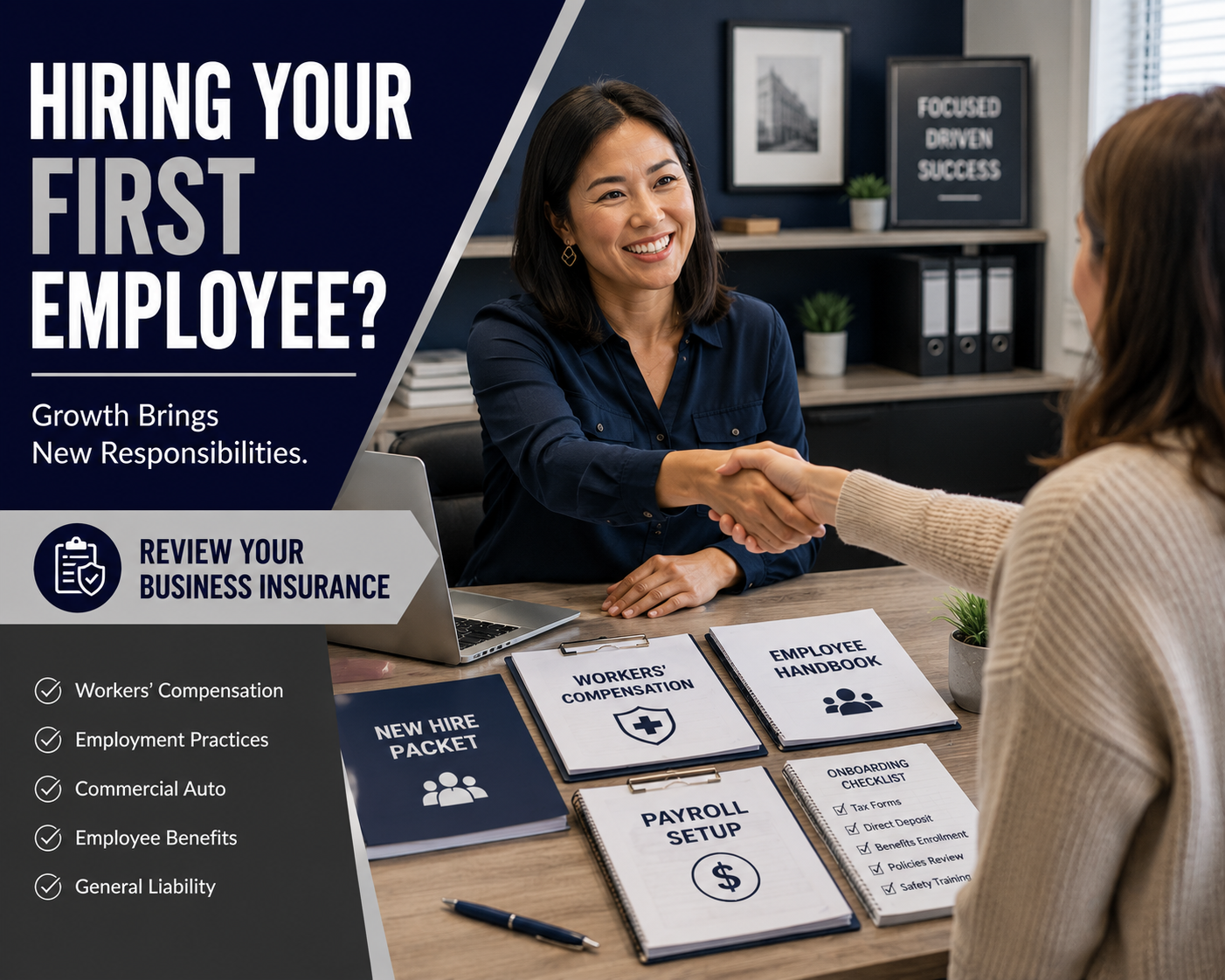
For many business owners, hiring the first employee is a major milestone.
It often signals growth, increased demand, and the transition from operating alone to building a team. While much of the focus is placed on recruiting, payroll, onboarding, and training, another important consideration often receives less attention:
How does hiring your first employee affect your insurance needs?
Whether you operate a contracting business, retail store, restaurant, consulting firm, trucking company, or professional services practice, adding employees can introduce new responsibilities and new risks.
Understanding how insurance may fit into that transition can help business owners make more informed decisions as their companies grow.
Growth Creates New Responsibilities
When you’re a sole proprietor working independently, your business risks may look very different than when employees become involved.
Adding staff can create new exposures related to:
- Workplace injuries
- Employment practices
- Vehicle use
- Customer interactions
- Equipment operation
- Property access
- Employee benefits
As your workforce grows, the potential impact of unexpected events may grow as well.
This is one reason many business owners review their insurance program before hiring their first employee rather than afterward.
Workers’ Compensation Is Often One of the First Considerations
One of the most important insurance topics for employers is Workers’ Compensation.
Workers’ Compensation is designed to provide benefits for employees who experience work-related injuries or illnesses, subject to state laws and policy terms.
Depending on the circumstances, benefits may include:
- Medical treatment
- Wage replacement benefits
- Rehabilitation services
- Other benefits required by law
Requirements vary by state, industry, and business structure, but many business owners discover that hiring employees triggers Workers’ Compensation obligations.
Understanding these requirements before making a hire can help avoid compliance issues later.
Employee Injuries Can Occur in Any Industry
Many owners assume workplace injuries only happen in construction or manufacturing environments.
However, injuries can occur in virtually any workplace.
Examples may include:
- Slip-and-fall accidents
- Repetitive motion injuries
- Lifting injuries
- Vehicle accidents
- Office-related injuries
- Equipment-related incidents
Even businesses that operate primarily from an office can experience employee injury claims.
Preparing before an incident occurs is often easier than responding afterward.
Commercial Auto Considerations
Business owners sometimes allow employees to drive company vehicles or use personal vehicles for business purposes.
When employees are driving as part of their job responsibilities, additional insurance considerations may arise.
Examples include:
- Delivery drivers
- Service technicians
- Sales representatives
- Project managers
- Field supervisors
A review of your commercial insurance coverage can help determine whether vehicle-related exposures are properly addressed.
Employment Practices Liability Concerns
As businesses grow, employee-related disputes may occasionally arise.
Examples can include allegations involving:
- Wrongful termination
- Discrimination
- Harassment
- Retaliation
- Failure to promote
Even when allegations are unfounded, responding to employment-related claims can be costly.
Some businesses explore Employment Practices Liability Insurance (EPLI) as part of a broader risk management strategy.
Employee Benefits Can Help Attract Talent
Insurance isn’t only about protecting against losses.
For many growing businesses, benefits can also play a role in attracting and retaining employees.
Depending on business size and goals, employers may consider:
- Health insurance
- Dental insurance
- Vision insurance
- Life insurance
- Disability coverage
- Retirement benefits
Competitive benefits packages can sometimes help businesses compete for qualified talent in challenging labor markets.
Business Growth Often Changes Insurance Needs
Many business owners purchase insurance when they first launch their company and then rarely revisit it.
However, growth can significantly change a business’s risk profile.
Questions worth considering include:
- Have payroll figures changed?
- Are employees driving for work?
- Has revenue increased?
- Have operations expanded?
- Has equipment been added?
- Are new services being offered?
A policy that worked for a one-person operation may not fully reflect the realities of a growing business.
Hiring Employees Is a Milestone Worth Planning For
Hiring your first employee is often exciting.
It may mean your business is generating enough demand to expand operations and increase capacity.
However, growth also brings new responsibilities.
Understanding insurance considerations before making that first hire can help reduce surprises and position your business for long-term success.
Request a Business Insurance Review
McElroy Insurance Services helps business owners evaluate insurance needs as their companies grow.
Whether you’re preparing to hire your first employee or expanding an existing workforce, reviewing your insurance program can help identify potential protection gaps before they become larger issues.
📞 Call: (866) 747-9185
📝 Request a Quote:
https://insurance.mcelroy-inc.com/quote/
Growth is exciting. Make sure your insurance program grows with your business.