
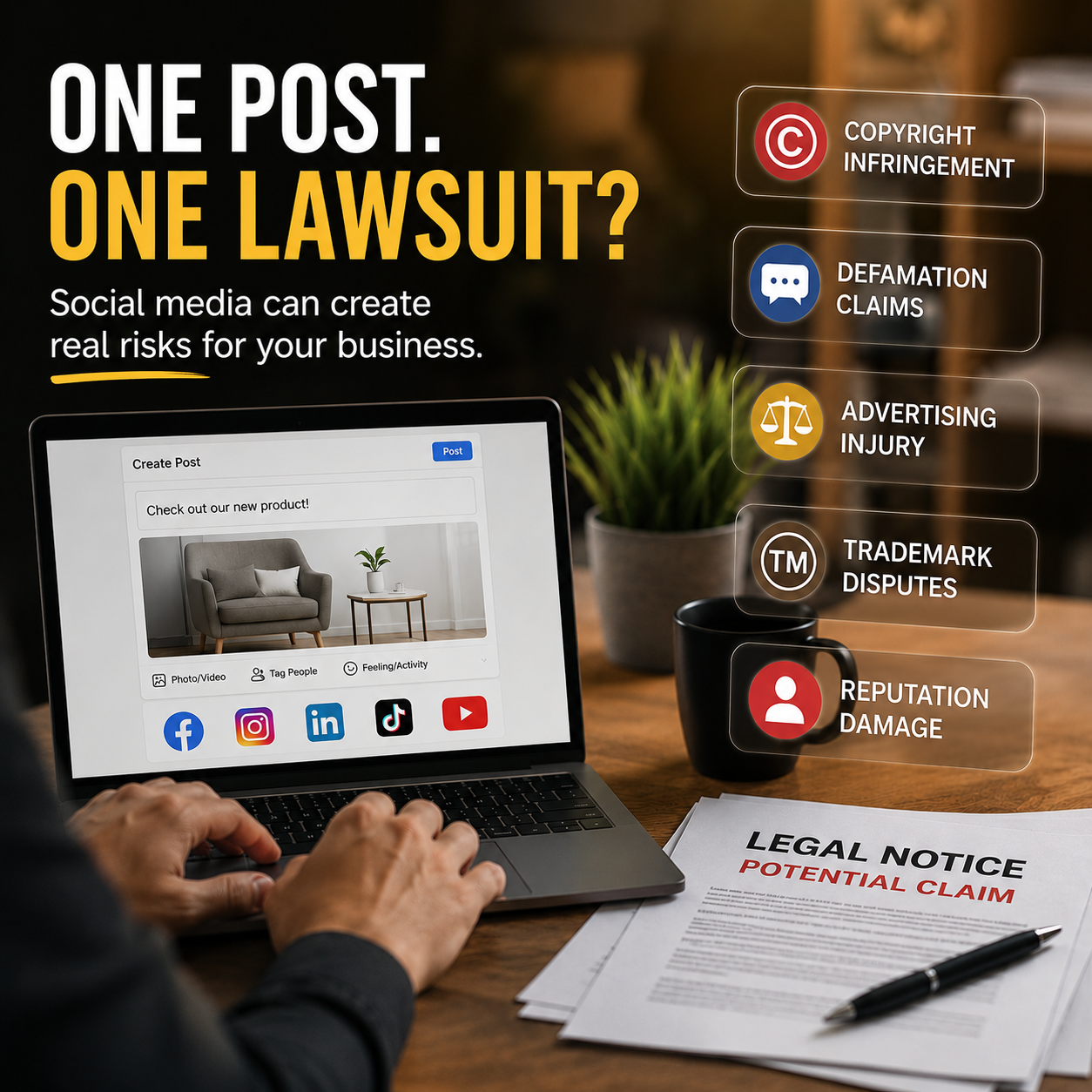
Social media has become one of the most powerful marketing tools available to businesses of all sizes. Whether you’re a contractor, restaurant owner, consultant, retailer, real estate professional, or nonprofit organization, platforms like Facebook, Instagram, LinkedIn, TikTok, X, and YouTube provide opportunities to connect with customers and promote your services.
However, while social media can help businesses grow, it can also create risks that many owners never consider.
Most business owners think about liability in terms of accidents, injuries, property damage, or lawsuits arising from their operations. What many don’t realize is that certain social media activities can also lead to legal disputes and potential financial exposure.
Could a single post create liability for your business?
In some situations, the answer is yes.
Your Business Is Publishing Content
Every time your business publishes a social media post, story, reel, advertisement, blog article, or video, you are distributing content to the public.
Most posts are harmless. However, businesses should recognize that online content can sometimes create unintended consequences.
Common examples include:
- Copyright disputes
- Trademark violations
- Defamation allegations
- Misleading advertising claims
- Privacy concerns
- Employee-related social media issues
Understanding these risks can help businesses make more informed decisions about their marketing activities.
Copyright Issues Are More Common Than Many People Think
One of the most common social media mistakes businesses make is using content they don’t own.
Examples may include:
- Downloading images from Google
- Using professional photography without permission
- Reposting content without authorization
- Using copyrighted graphics
- Using copyrighted music in promotional videos
Many business owners assume that because content is available online, it is free to use.
Unfortunately, that is not always the case.
Photographers, designers, musicians, content creators, and media companies often retain ownership rights to their work. Unauthorized use can result in takedown requests, legal demands, licensing fees, or other disputes.
Before using third-party content, businesses should verify that they have permission or a valid license to use the material.
Defamation Risks Can Arise Online
Social media can also create risks when businesses make statements about competitors, customers, vendors, or other individuals.
Defamation generally involves publishing false statements that harm another person’s or company’s reputation.
Examples could include:
- Public accusations against competitors
- False statements regarding another business
- Unverified claims presented as fact
- Misleading allegations made online
Even when a business believes it is telling the truth, disputes can become expensive if legal action follows.
This is one reason companies should approach online criticism and public disputes carefully.
Advertising Claims Matter
Businesses regularly use social media to promote products and services.
While marketing is an essential part of growth, advertising claims should be accurate and supportable.
Potential issues may arise when businesses:
- Make exaggerated performance claims
- Promise results they cannot guarantee
- Misrepresent products or services
- Use misleading comparisons
- Advertise unavailable offers
Consumers, competitors, and regulators may all scrutinize advertising claims under certain circumstances.
Maintaining clear, honest, and accurate marketing practices can help reduce unnecessary risk.
Employee Social Media Activity Can Create Exposure
Many businesses focus on their official social media accounts but overlook employee activity.
Employees may unintentionally create problems by:
- Sharing confidential information
- Posting inappropriate content
- Discussing clients publicly
- Violating company policies
- Representing personal opinions as company positions
As businesses grow, establishing clear social media guidelines may help reduce misunderstandings and protect both employees and the organization.
What Is Advertising Injury?
Many business owners are unfamiliar with the term “advertising injury.”
Advertising injury is a coverage concept often associated with General Liability insurance policies.
Depending on the policy language and specific circumstances, coverage may apply to certain claims involving:
- Copyright infringement
- Defamation
- Libel
- Slander
- Misappropriation of advertising ideas
Coverage varies significantly by carrier and policy form. Exclusions, limitations, and endorsements can affect how claims are handled.
For this reason, business owners should avoid assuming that every social media-related claim will automatically be covered.
Understanding your business insurance coverage is an important part of managing risk.
Social Media Is a Business Tool—Treat It Like One
Many companies invest heavily in vehicles, equipment, inventory, and office space because they recognize those assets have value.
Your social media presence should be viewed similarly.
A business page can influence:
- Brand reputation
- Customer relationships
- Lead generation
- Sales opportunities
- Public perception
Because social media plays such an important role in modern business operations, it deserves the same level of attention and oversight as other business activities.
Managing Social Media Risk
Businesses can reduce exposure by taking a few practical steps:
- Use licensed images and media
- Verify facts before posting
- Avoid public disputes online
- Review advertising claims carefully
- Implement social media policies
- Train employees on acceptable use
- Review insurance coverage periodically
While no strategy eliminates every risk, proactive planning can help businesses navigate social media more effectively.
Review Your Business Insurance Coverage
Social media has created tremendous opportunities for businesses, but it has also introduced new forms of risk.
Understanding how your insurance program responds to modern business exposures can help you make more informed decisions as your company grows.
McElroy Insurance Services helps business owners evaluate coverage options and identify potential protection gaps.
📞 Call: (866) 747-9185
📝 Request a Quote:
https://insurance.mcelroy-inc.com/quote/
Whether you’re running a local business, managing a growing company, or expanding your online presence, reviewing your insurance coverage can help ensure you’re prepared for today’s business environment.