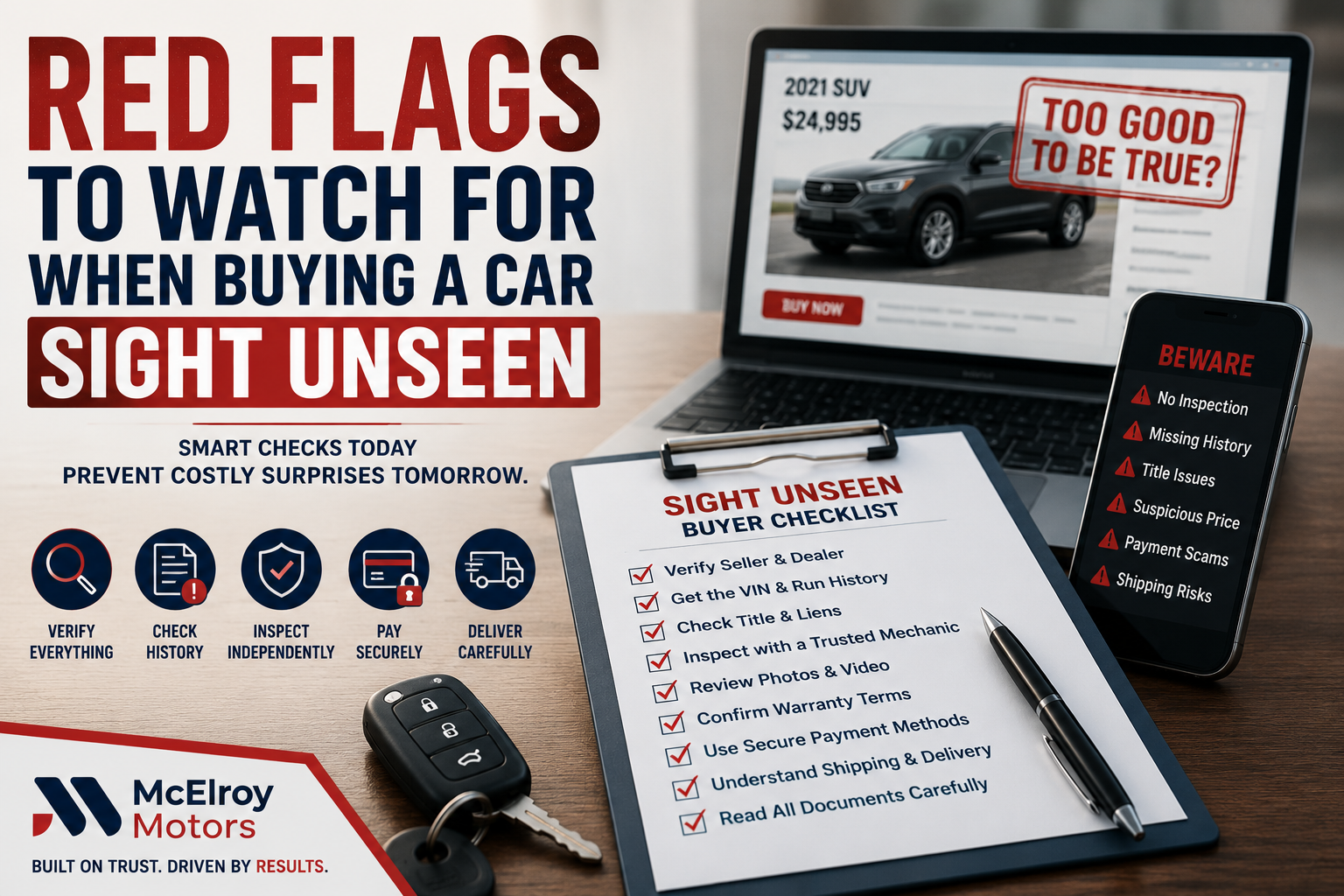
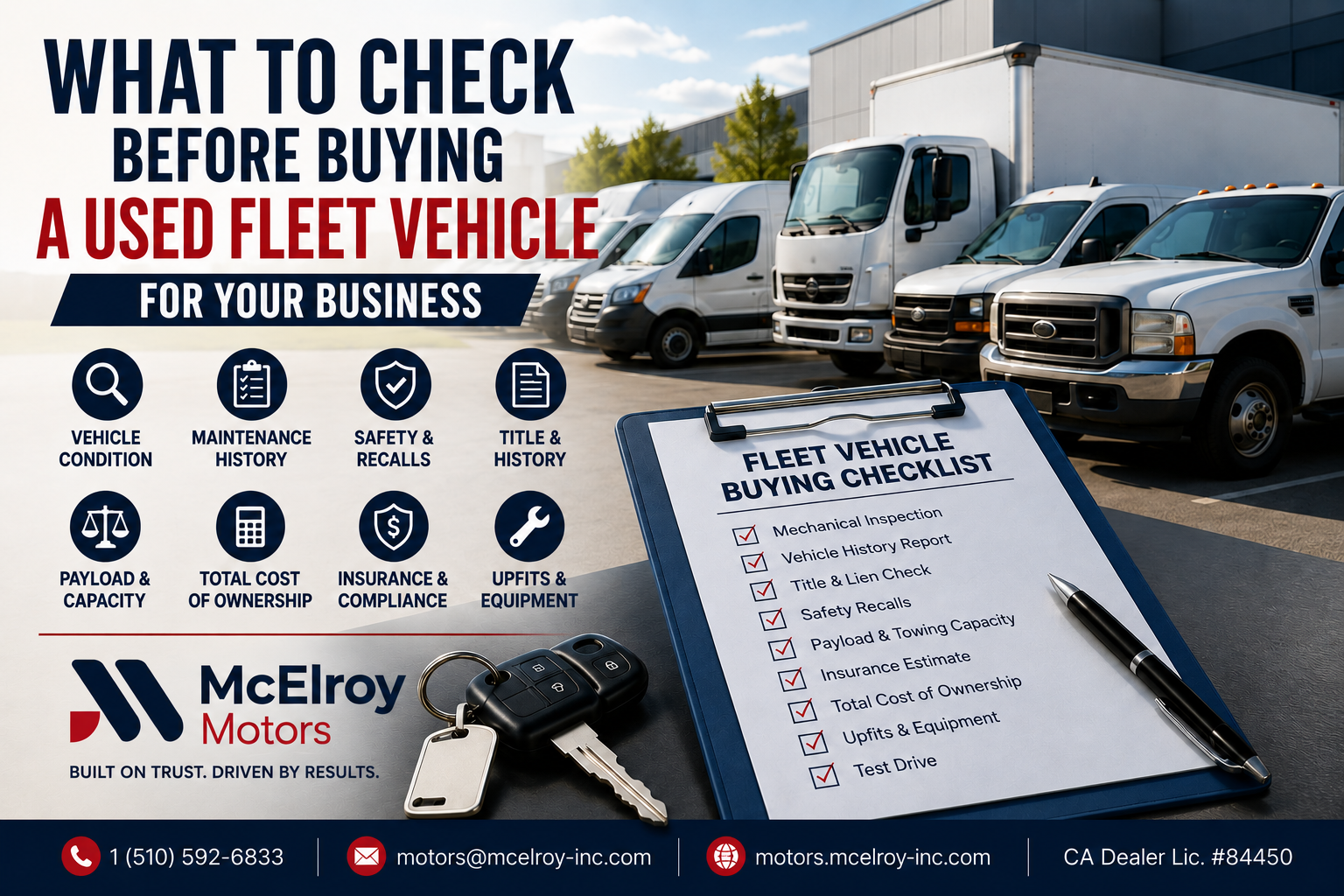
Buying a used fleet vehicle is not the same as purchasing a personal vehicle.
A car, pickup, cargo van, box truck, or service vehicle used for business must do more than look good during a test drive. It needs to support daily operations, carry the required people or equipment, remain dependable under commercial use, fit the company’s insurance and compliance requirements, and avoid creating excessive maintenance costs.
A low purchase price can quickly lose its appeal if the vehicle spends weeks in the repair shop, cannot safely carry the intended payload, has an unresolved title issue, or does not meet the requirements of the contracts your business plans to perform.
Before adding a used vehicle to your business fleet, evaluate the vehicle as an operating asset—not simply as transportation.
Why Buying the Right Used Fleet Vehicle Matters
A fleet vehicle directly affects productivity, customer service, employee safety, operating expenses, and the company’s ability to complete work.
The wrong vehicle can create costs through:
- Unexpected repairs
- Excessive fuel consumption
- Downtime and missed appointments
- Insufficient cargo or towing capacity
- Higher insurance expenses
- Premature tire and brake wear
- Compliance problems
- Reduced resale value
- Difficulty finding replacement parts
- Inability to perform the work for which it was purchased
The goal should not be to find the cheapest available vehicle. The goal should be to identify the vehicle that offers the best combination of purchase price, condition, capability, operating cost, and expected service life.
1. Start With the Vehicle’s Intended Business Use
Before reviewing listings, define exactly what the vehicle will be expected to do.
A salesperson traveling between appointments has different needs from a contractor carrying tools, a delivery company transporting packages, or a restaurant operating a catering van.
Consider:
- Daily and annual mileage
- City, highway, rural, or off-road use
- Number of passengers
- Tools and equipment carried
- Cargo weight and dimensions
- Towing requirements
- Climate and road conditions
- Parking restrictions
- Loading and unloading frequency
- Whether shelving, racks, refrigeration, or other upfits are needed
- Whether employees will take the vehicle home
- Whether the vehicle will cross state lines
- How long the company expects to keep it
Do not buy a vehicle first and try to adapt the business around it afterward.
Create a written operating profile before shopping so that each vehicle can be compared against the same requirements.
2. Confirm Payload, Towing, and Gross Vehicle Weight Ratings
A vehicle may have enough physical space for your equipment while still lacking the legal or mechanical capacity to carry the weight.
Review the manufacturer’s ratings for:
- Gross Vehicle Weight Rating, or GVWR
- Gross Combined Weight Rating, or GCWR
- Payload capacity
- Front and rear axle weight ratings
- Maximum towing capacity
- Tongue-weight limits
Payload includes more than the products or tools placed in the cargo area. It may also include the driver, passengers, shelving, ladder racks, toolboxes, fuel, trailer tongue weight, and permanently installed equipment.
Overloading can accelerate wear on:
- Brakes
- Tires
- Suspension components
- Wheel bearings
- Steering systems
- Transmissions
- Cooling systems
It may also affect handling, stopping distance, insurance, and regulatory obligations.
Do not rely only on a seller’s statement that a truck or van “can handle the weight.” Review the certification label, owner’s manual, manufacturer specifications, and any upfit documentation.
3. Verify the Vehicle Identification Number
The Vehicle Identification Number, or VIN, should match across all available records.
Compare the VIN shown on:
- The dashboard
- Driver-side door or doorjamb label
- Title
- Registration
- Purchase agreement
- Vehicle history report
- Maintenance records
- Inspection reports
A mismatch may indicate a clerical error, improper paperwork, altered records, or a more serious title problem.
The VIN also allows you to verify the vehicle’s original specifications and search for unresolved safety recalls.
NHTSA allows vehicle buyers and owners to enter a VIN into its recall lookup system to identify unrepaired safety recalls. NHTSA also notes that recalls do not expire, although eligibility for free repair may depend on the recall and vehicle circumstances.
4. Check for Open Safety Recalls
Do not assume that a fleet seller, auction, previous owner, or dealer completed every recall.
Search the VIN through NHTSA’s official recall database before completing the purchase. If an open recall appears, determine:
- What component is affected
- Whether the vehicle can be safely operated
- Whether parts are currently available
- Which dealership can perform the repair
- How long the vehicle may be unavailable
- Whether the repair will be completed before delivery
NHTSA advises owners to contact an authorized manufacturer dealership to arrange eligible recall repairs.
A recall may not automatically make the vehicle unsuitable, but the business should understand the safety and downtime implications before placing it into service.
5. Obtain a Vehicle History Report
A vehicle history report can help identify events that may not be obvious during a visual inspection.
Review it for:
- Prior accidents
- Reported structural damage
- Flood or fire history
- Salvage or rebuilt title branding
- Odometer inconsistencies
- Number of prior owners
- Commercial or rental use
- Registration history
- Reported service events
- Prior states of operation
- Theft records
- Lien information, when available
A history report should not replace a mechanical inspection. Not every collision, repair, maintenance visit, or ownership event is necessarily reported to a history database.
Use the report as one part of the due-diligence process—not as proof that the vehicle has no hidden problems.
6. Review the Title Status Carefully
The title determines whether the seller has the legal ability to transfer ownership and whether the vehicle carries any important branding.
Look for terms such as:
- Clean
- Salvage
- Rebuilt
- Reconstructed
- Flood
- Lemon-law buyback
- Odometer discrepancy
- Junk
- Nonrepairable
Title terminology and disclosure requirements vary by state.
A branded-title vehicle may cost less, but it can create additional concerns involving:
- Financing
- Commercial insurance
- Resale value
- Warranty eligibility
- Registration
- Safety
- Contractual fleet requirements
- Manufacturer support
Confirm that the name of the seller matches the title and that any existing lien will be properly released.
For higher-value vehicles or unusual title histories, consider verifying the ownership and lien records through the applicable state motor vehicle agency or a qualified title professional.
7. Review the FTC Buyers Guide When Purchasing From a Dealer
Used vehicles offered for sale by covered dealers generally must display the Federal Trade Commission’s Buyers Guide.
The Buyers Guide indicates whether the vehicle is being sold with a dealer warranty or “as is,” subject to applicable state law. When a warranty is offered, the Guide identifies important terms, including the duration of coverage, the systems covered, and the percentage of repair costs the dealer will pay.
Before signing:
- Read both sides of the Buyers Guide.
- Confirm whether the vehicle is sold as is or with a warranty.
- Obtain every warranty promise in writing.
- Compare the Guide with the purchase agreement.
- Ask whether any manufacturer warranty remains.
- Review exclusions and deductible requirements.
- Keep the final Buyers Guide with the company’s vehicle records.
The FTC cautions buyers that spoken promises can be difficult to enforce, so repairs, guarantees, and conditions of sale should be documented in writing.
8. Arrange an Independent Prepurchase Inspection
A prepurchase inspection should be completed by a qualified mechanic or commercial-vehicle technician who is not financially dependent on the sale.
For specialty trucks, diesel vehicles, refrigerated units, modified vans, or vehicles with hydraulic systems, use a technician familiar with that equipment.
The inspection should include more than a quick visual review.
Engine and cooling system
Check for:
- Oil leaks
- Coolant leaks
- Unusual noises
- Excessive exhaust smoke
- Contaminated fluids
- Signs of overheating
- Worn belts and hoses
- Fault codes
- Weak compression or blow-by concerns on applicable engines
Transmission and driveline
Review:
- Shift quality
- Transmission fluid condition
- Clutch operation
- Driveshafts
- Universal joints
- Differentials
- Transfer case
- Axles
- Four-wheel-drive systems
Steering and suspension
Inspect:
- Ball joints
- Tie rods
- Bushings
- Shocks and struts
- Springs
- Wheel bearings
- Steering play
- Alignment
- Uneven ride height
Brakes and tires
Evaluate:
- Brake-pad or shoe thickness
- Rotor or drum condition
- Brake-fluid condition
- Air-brake systems, when applicable
- Tire tread
- Tire age
- Sidewall damage
- Matching tire sizes and load ratings
- Uneven wear
Electrical system
Test:
- Battery
- Alternator
- Starter
- Exterior lighting
- Dashboard warnings
- Power accessories
- Charging outlets
- Backup camera
- Safety sensors
- Trailer wiring
Body and frame
Look for:
- Structural repairs
- Frame damage
- Rust
- Corrosion
- Water intrusion
- Misaligned body panels
- Uneven paint
- Roof or cargo-area damage
- Improperly installed accessories
Ask the inspector for a written report and repair estimate. This information can help you decide whether to purchase the vehicle, negotiate the price, or walk away.
9. Scan the Vehicle for Diagnostic Trouble Codes
A dashboard without warning lights does not necessarily mean the vehicle has no stored problems.
Ask the inspector to scan the vehicle’s electronic systems for:
- Active diagnostic trouble codes
- Pending codes
- Recently cleared codes
- Emissions faults
- Transmission faults
- Airbag faults
- Anti-lock brake faults
- Battery or charging problems
- Advanced driver-assistance system errors
Recently cleared codes may indicate that the seller reset the system shortly before the inspection.
The mechanic should also determine whether the vehicle’s readiness monitors have completed their self-tests. Incomplete monitors can suggest that the battery was recently disconnected or diagnostic codes were cleared.
10. Examine the Maintenance Records
Service history can be more important than mileage alone.
A higher-mileage vehicle with consistent maintenance may be a stronger purchase than a lower-mileage vehicle with long service gaps.
Look for documentation of:
- Oil and filter changes
- Transmission service
- Cooling-system service
- Brake replacement
- Tire replacement and rotation
- Differential and transfer-case service
- Fuel-system maintenance
- Timing belt or timing chain work
- Battery replacement
- Diesel particulate filter service
- Emissions-system repairs
- Suspension work
- Recall completion
- Upfit maintenance
- Annual inspections for regulated vehicles
Compare the records with the manufacturer’s recommended maintenance schedule.
Missing records do not prove that maintenance was neglected, but the absence of documentation increases uncertainty. Adjust the inspection depth, purchase price, and repair reserve accordingly.
11. Evaluate Mileage, Engine Hours, and Idle Time
Odometer mileage tells only part of the story.
Fleet vehicles may spend substantial time idling at jobsites, loading areas, traffic-control locations, or customer facilities. That use can create wear without adding many miles.
When available, review:
- Engine hours
- Idle hours
- Power take-off hours
- Maintenance intervals based on hours
- Average speed
- Fuel usage
- Telematics records
A service truck with moderate mileage but extremely high idle hours may have more engine wear than the odometer suggests.
For diesel vehicles, prolonged idling can also affect emissions components and regeneration cycles.
12. Look for Evidence of Severe Prior Use
Some fleet vehicles operate under harsher conditions than others.
Investigate whether the vehicle was previously used for:
- Towing
- Construction
- Rental operations
- Delivery routes
- Emergency services
- Snow removal
- Off-road work
- Waste removal
- Heavy idling
- Short-trip urban service
- Coastal or winter-road environments
Signs of demanding prior use may include:
- Hitch wear
- Bed or cargo-floor damage
- Bent racks
- Excessive brake wear
- Rust from road salt
- Damaged suspension components
- Fluid leaks
- Uneven tires
- Interior wear inconsistent with mileage
- Drilled panels from removed equipment
- Wiring modifications
- Evidence of previous decals or fleet markings
Prior commercial use is not automatically a reason to reject a vehicle. Many fleet vehicles receive disciplined maintenance. The issue is whether the condition, records, and price accurately reflect the vehicle’s history.
13. Inspect Upfits and Aftermarket Modifications
Commercial vehicles are often modified with:
- Shelving
- Partitions
- Ladder racks
- Liftgates
- Cranes
- Refrigeration systems
- Auxiliary batteries
- Inverters
- Generators
- Toolboxes
- Lighting systems
- Trailer-brake controllers
- Telematics devices
- Snowplows
- Dump bodies
- Wheelchair lifts
Confirm that every installed system:
- Works correctly
- Is securely mounted
- Does not exceed weight limits
- Has supporting documentation
- Was installed professionally
- Does not interfere with airbags or safety equipment
- Meets applicable electrical and structural requirements
- Can be serviced locally
- Is covered by available parts and technical support
Poorly installed wiring or equipment can create fire risks, battery drain, electrical faults, water leaks, or structural damage.
Include the weight of the upfit when calculating remaining payload capacity.
14. Confirm That Replacement Parts and Service Are Available
A vehicle can appear affordable until the business discovers that parts are expensive, backordered, or available only from a distant specialty shop.
Before purchasing, research:
- Local dealer support
- Independent repair availability
- Parts costs
- Common mechanical failures
- Tire availability
- Service intervals
- Manufacturer support
- Upfit service providers
- Warranty-repair locations
- Expected downtime for major repairs
Standardizing a fleet around a smaller number of makes, models, engines, and tire sizes may simplify training, parts inventory, maintenance scheduling, and vehicle replacement.
15. Calculate the Total Cost of Ownership
The purchase price is only one component of fleet cost.
Estimate:
- Sales tax
- Registration and title fees
- Financing charges
- Commercial auto insurance
- Fuel or electricity
- Preventive maintenance
- Tires
- Expected repairs
- Required upfits
- Driver training
- Telematics
- Licensing or permits
- Inspection costs
- Downtime
- Depreciation
- Resale value
A less expensive vehicle may have higher fuel consumption, more frequent repairs, poor resale value, or inadequate capability.
Compare several vehicles using an estimated cost per mile or cost per operating month rather than relying only on the sticker price.
16. Obtain an Insurance Estimate Before Buying
Do not assume every vehicle will cost approximately the same to insure.
Commercial auto pricing may be affected by:
- Vehicle type
- Gross vehicle weight
- Cost when new
- Current value
- Repair costs
- Radius of operation
- Garaging location
- Business use
- Driver information
- Cargo or equipment carried
- Towing
- Claims history
- Selected liability limits
- Physical-damage deductibles
- Safety technology
- Required filings or endorsements
Send the VIN and operating details to your insurance professional before completing the purchase.
Also discuss whether the company may need:
- Comprehensive coverage
- Collision coverage
- Hired and non-owned auto coverage
- Motor truck cargo coverage
- Inland marine coverage for tools and equipment
- Commercial umbrella coverage
- Gap protection or loan-related coverage
- Special endorsements for attached equipment
A commercial auto policy does not automatically insure every tool, product, or piece of equipment carried inside the vehicle.
17. Determine Whether Commercial-Vehicle Regulations Apply
Not every business vehicle is regulated as a commercial motor vehicle under federal motor-carrier rules. Applicability depends on factors such as vehicle weight, passenger capacity, cargo, interstate activity, and the nature of the operation.
For covered motor carriers, FMCSA regulations require systematic inspection, repair, and maintenance of commercial motor vehicles under the carrier’s control.
Covered commercial vehicles must also undergo a qualifying periodic inspection at least once every 12 months.
Before purchasing a heavier truck, passenger vehicle, or vehicle used in interstate commerce, determine whether the business may need:
- A USDOT number
- Motor-carrier operating authority
- Annual inspections
- Driver qualification files
- Hours-of-service compliance
- Electronic logging devices
- Drug and alcohol testing
- Vehicle maintenance records
- Specific commercial driver licensing
- State-level permits or registrations
Requirements vary by vehicle, operation, cargo, passenger capacity, and jurisdiction. Confirm the rules before placing the vehicle into service.
18. Review the Vehicle’s Safety Ratings and Features
Safety should be evaluated for the specific year, model, body configuration, and trim.
NHTSA provides vehicle safety ratings and recall information through its official comparison tools.
Depending on the vehicle and intended use, desirable safety features may include:
- Electronic stability control
- Anti-lock brakes
- Side-curtain airbags
- Automatic emergency braking
- Blind-spot monitoring
- Lane-departure warning
- Backup camera
- Rear cross-traffic alert
- Parking sensors
- Tire-pressure monitoring
- Trailer-sway control
- Driver monitoring
- Speed-limiting technology
Confirm that the installed features operate properly. Sensor calibration or replacement after a collision can be expensive.
19. Complete a Proper Road Test
The road test should replicate the vehicle’s expected business use as closely as practical.
Test:
- Cold start
- Acceleration
- Braking
- Steering response
- Highway operation
- Low-speed maneuvering
- Parking
- Reverse operation
- Transmission shifting
- Climate-control performance
- Noise and vibration
- Driver visibility
- Seat comfort
- Cargo access
For a truck or van, evaluate turning radius, mirror coverage, blind spots, loading height, cab access, and rear visibility.
When appropriate and legally permissible, the inspection should also assess performance under representative load conditions.
20. Build a Repair Reserve Before Deployment
Even a carefully inspected used vehicle may need repairs shortly after purchase.
Budget for immediate items such as:
- Fluids
- Filters
- Tires
- Brakes
- Battery
- Belts and hoses
- Alignment
- Registration
- Safety equipment
- Upfit repairs
- Decals or branding
- Telematics installation
- Duplicate keys
Avoid spending the entire fleet budget on the purchase price.
A vehicle that cannot be repaired promptly can disrupt revenue and force the company to rent a replacement at additional cost.
Used Fleet Vehicle Inspection Checklist
Before completing the purchase, confirm that you have reviewed:
Business suitability
- Intended use
- Expected mileage
- Passenger needs
- Cargo dimensions
- Payload
- Towing capacity
- Required upfits
- Parking and route conditions
Ownership and history
- VIN verification
- Title status
- Lien status
- Vehicle history report
- Odometer history
- Prior fleet or rental use
- Recall status
- Buyers Guide and warranty terms
Mechanical condition
- Independent inspection
- Diagnostic scan
- Engine and transmission
- Cooling system
- Brakes and tires
- Steering and suspension
- Electrical systems
- Frame and body
- Emissions systems
- Maintenance records
Financial review
- Purchase price
- Taxes and registration
- Financing
- Insurance
- Fuel
- Maintenance
- Repairs
- Upfit costs
- Downtime
- Resale value
Compliance
- Weight rating
- Required license class
- Annual inspection status
- USDOT or operating-authority implications
- Maintenance records
- State registration requirements
- Contract-specific vehicle requirements
Red Flags That Should Slow Down the Purchase
Proceed cautiously when:
- The seller refuses an independent inspection.
- The VIN does not match the documents.
- The title is unavailable or unclear.
- Warning lights fail to illuminate during startup.
- Diagnostic monitors were recently reset.
- The service history is inconsistent with the mileage.
- The vehicle has major rust or structural repairs.
- The seller cannot explain aftermarket wiring.
- The vehicle has unresolved safety recalls.
- Tires have mismatched load ratings.
- The stated towing or payload capacity cannot be verified.
- Fluid leaks appear after the test drive.
- The price is far below comparable vehicles without a clear explanation.
- Promised repairs are not documented in writing.
- The vehicle does not qualify for the insurance or financing you expected.
Walking away from the wrong vehicle is usually less expensive than managing years of downtime and repairs.
Buy for the Work, Not Just the Price
A used fleet vehicle should help the business operate more efficiently, not create a recurring operational problem.
Before purchasing, verify the vehicle’s condition, history, capacity, insurance cost, maintenance requirements, safety record, and regulatory implications. Compare the total cost of ownership—not simply the advertised price.
McElroy Motors helps individuals and businesses evaluate vehicle needs, locate suitable options, and navigate the vehicle-buying process with greater clarity.
Call or text: 1 (510) 592-6833
Email: motors@mcelroy-inc.com
Website: motors.mcelroy-inc.com
CA Dealer Lic. #84450
Vehicle specifications, warranties, title requirements, insurance eligibility, tax treatment, licensing rules, and commercial-vehicle regulations vary by vehicle and jurisdiction. This article provides general educational information and does not replace a professional mechanical inspection, legal advice, tax advice, insurance guidance, or regulatory review.