
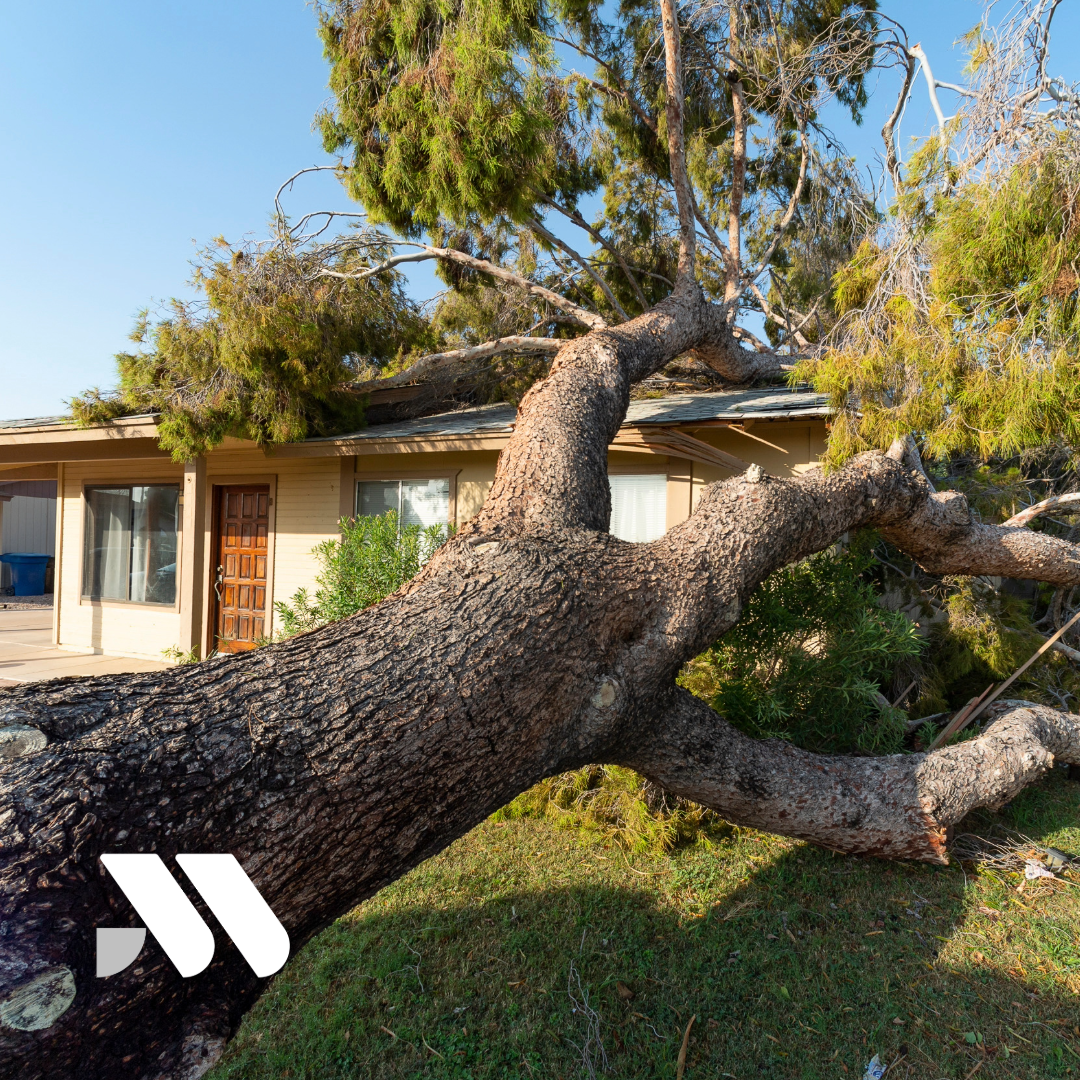
Severe weather can arrive with little warning. High winds, heavy rain, ice storms, and other weather events can weaken trees and cause branches—or entire trees—to fall unexpectedly. When a tree falls on a home, homeowners are often left with urgent questions about safety, repairs, cleanup, and insurance.
One of the most common questions homeowners ask is: “Will my homeowners insurance cover the damage?”
While every policy is different, understanding how homeowners insurance may respond to tree-related damage can help homeowners navigate the situation more confidently if a loss occurs.
Tree Damage Can Cause Significant Property Losses
A fallen tree can damage far more than a roof.
Depending on where the tree lands, damage may include:
- Roof damage
- Structural damage
- Broken windows
- Damaged siding
- Water intrusion
- Damaged fences
- Detached garage damage
- Shed damage
- Landscaping damage
- Vehicle damage
In severe situations, a home may become temporarily uninhabitable while repairs are completed.
The cost of repairs can quickly add up, making insurance an important part of financial recovery after a covered loss.
Does Homeowners Insurance Cover Fallen Trees?
In many situations, homeowners insurance may help cover damage caused when a tree falls on a home due to a covered peril.
Examples may include:
- Windstorms
- Lightning strikes
- Hailstorms
- Certain severe weather events
If a covered event causes the tree to fall and damage the home, homeowners insurance may help pay for repairs to the structure, subject to policy terms, conditions, deductibles, and coverage limits.
Coverage varies by policy and carrier, so homeowners should always review their specific policy language.
What If the Tree Falls on a Detached Structure?
Many homeowners have structures on their property that are separate from the main home.
Examples include:
- Detached garages
- Storage sheds
- Workshops
- Gazebos
- Fences
Depending on the policy, damage to these structures may be covered under what is commonly known as Other Structures Coverage.
Coverage limits for detached structures are often different from the dwelling coverage limit, making it important to understand how your policy is structured.
Who Pays If a Neighbor’s Tree Falls on Your House?
This is one of the most misunderstood insurance situations.
Many homeowners assume that if a neighbor’s tree falls onto their property, the neighbor’s insurance automatically pays for the damage.
In reality, responsibility is often more complicated.
If a healthy tree falls because of a storm or other covered weather event, homeowners insurance may typically respond through the affected homeowner’s policy.
However, if negligence is involved—such as a dead or dangerous tree that was known to be hazardous—the situation may require further investigation.
Determining responsibility often depends on the specific circumstances surrounding the loss.
What About Tree Removal?
Removing a fallen tree can be expensive.
Costs may vary based on:
- Tree size
- Accessibility
- Emergency removal needs
- Damage severity
- Local contractor pricing
In some situations, homeowners insurance may provide coverage for tree removal when the fallen tree damages a covered structure.
Coverage limitations often apply, and reimbursement amounts may vary depending on policy terms.
Homeowners should review their policy details and consult with their insurance carrier regarding tree removal coverage.
What Should You Do Immediately After a Tree Falls?
Safety should always be the first priority.
If a tree falls on your home:
1. Protect Yourself and Your Family
Avoid entering damaged areas until it is safe to do so.
Watch for:
- Structural instability
- Downed power lines
- Gas leaks
- Water intrusion
2. Contact Emergency Services if Necessary
If there are injuries, electrical hazards, or significant safety concerns, contact emergency responders immediately.
3. Document the Damage
Take photographs and videos of:
- The fallen tree
- Property damage
- Roof damage
- Interior damage
- Detached structures
Documentation can help support the claims process.
4. Prevent Additional Damage
If safe to do so, take reasonable steps to help prevent further damage.
Temporary measures may include:
- Tarping exposed areas
- Moving personal belongings away from water
- Securing vulnerable property
5. Contact Your Insurance Company
Notify your insurance carrier as soon as practical following a loss.
Prompt reporting may help begin the claims process and provide guidance on next steps.
Could Additional Living Expenses Coverage Help?
If a fallen tree causes enough damage to make a home temporarily uninhabitable, homeowners insurance may provide Additional Living Expenses (ALE) coverage.
Depending on the policy, ALE may help with certain temporary expenses such as:
- Hotel accommodations
- Temporary housing
- Increased meal expenses
- Other qualifying living costs
Coverage terms and limitations vary by policy.
Why Preventive Maintenance Matters
Regular property maintenance can help reduce the likelihood of tree-related losses.
Homeowners may consider:
- Inspecting large trees regularly
- Removing dead branches
- Addressing diseased trees
- Monitoring trees near structures
- Consulting certified arborists when concerns arise
While storms cannot always be prevented, proactive maintenance may reduce risk.
Review Your Homeowners Insurance Before a Loss Occurs
Many homeowners don’t think about tree damage until a storm causes a loss.
Understanding how your homeowners insurance policy may respond before an emergency occurs can help reduce uncertainty during an already stressful situation.
McElroy Insurance Services helps homeowners review coverage options and better understand how their insurance may respond to common property risks.
📞 Call: (866) 747-9185
🌐 Request a Quote: https://insurance.mcelroy-inc.com/quote/
📧 Email: insurance@mcelroy-inc.com
Whether you’re reviewing an existing homeowners policy or exploring coverage options for a new home, we’re here to help you make informed insurance decisions.